
Hurricane Melissa’s Category 5 landfall in Jamaica on October 28 has been described as the strongest in the island’s recorded history, with widespread power loss, severe infrastructure damage, and a national recovery bill estimated in the billions. Early assessments indicate damage equivalent to roughly 28–32% of Jamaica’s GDP and more than a million people affected—sobering numbers that demand a new model for resilient, equitable infrastructure.
Why the Status Quo Breaks Under Climate Shocks
Island grids are typically centralised, diesel-dependent, and vulnerable to single-point failures. Melissa reinforced three painful truths: outages cascade when transmission corridors fail; fuel logistics collapse under damaged ports and roads; and recovery drags when financing is tied to debt and long procurement cycles. Regional impacts across the Caribbean further underline the need for distributed, climate-ready systems.
A Holistic, Self-Funding Clean Infrastructure Model
Our partners deploy a modular, place-based energy and infrastructure approach that is fully funded and scalable around critical assets—airports, ports, utilities, data centres, hospitals, and industrial parks—so power and services can be restored and expanded locally without new sovereign debt.
Core pillars:
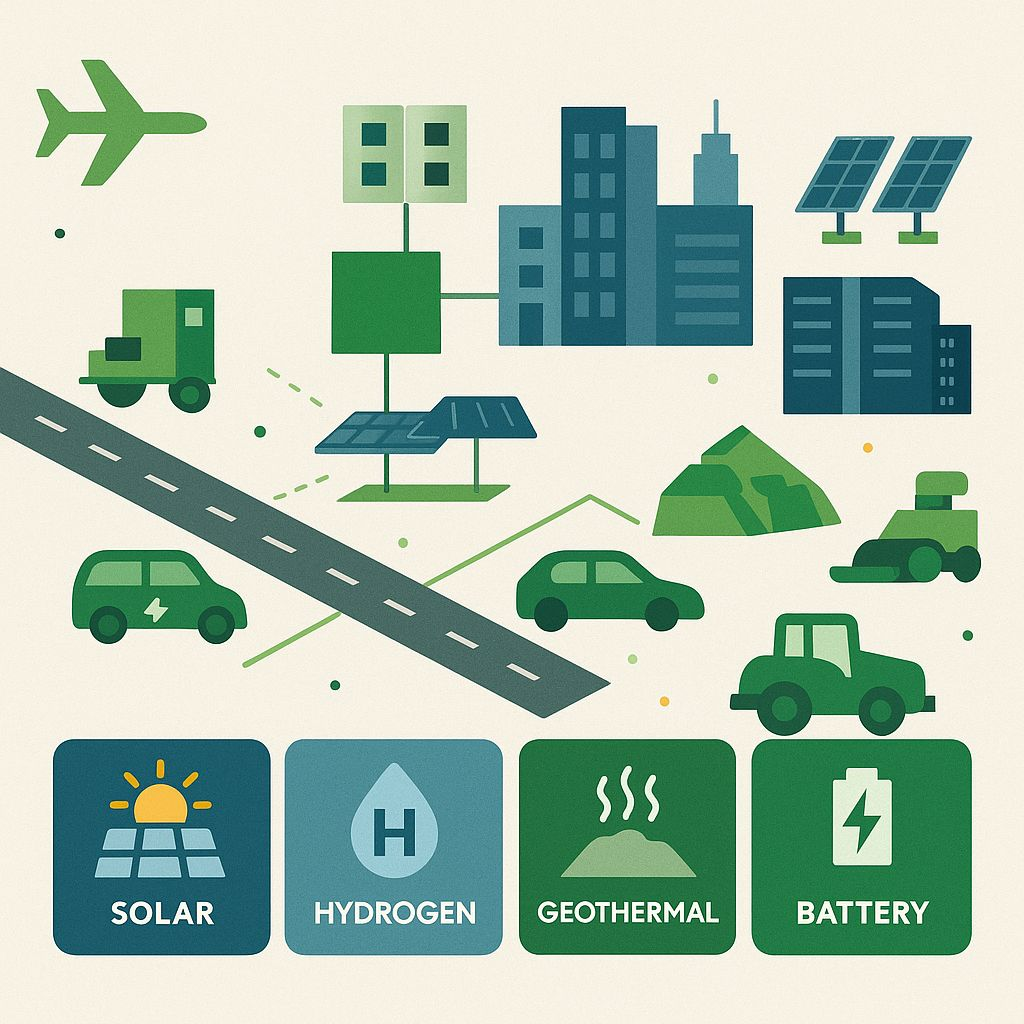
• Hybrid clean power: solar, geothermal, hydrogen, water-based systems, and long-duration/battery storage—engineered as mini-grids that can island or interconnect.
• Infrastructure upgrades at zero upfront cost: power-enabled road resurfacing, utility hardening, flood-smart drainage, and electrified public transport integrated into the energy business case.
• Performance-backed finance: long-term PPAs anchored by cornerstone offtakers (e.g., airports, data centres), enabling the system to self-fund capital and O&M while lowering lifetime energy costs.
What This Means for Jamaica’s Recovery
Rapid resilience near critical nodes (Sangster, Norman Manley, key substations, and regional hospitals) can cut restoration timelines, keep essential services online during future events, and power emergency logistics. Distributed storage and modular generation shorten the “dark gap” after storms, while micro-transit electrification keeps people and supplies moving even when fuel supply chains are disrupted. These approaches directly respond to the vulnerabilities exposed by Melissa.
Jobs, Local Supply Chains, and Just Transition
Because the model emphasises local assembly, O&M, and public-works tie-ins, it seeds skilled employment, supports MSMEs, and keeps more value on-island—key to building back livelihoods alongside infrastructure. Regional voices are already calling for climate-aligned finance and accelerated recovery partnerships; a self-funding program meets that moment.
Where to Start (90–180 Days)
1. Map critical loads & fragilities: airports, ports, hospitals, water plants, shelters, and data facilities.
2. Phase 1 mini-grids: deploy ~5–20 MW clusters with storage at each node; design for black-start capability and inter-node sharing.
3. Grid-hardening works: targeted undergrounding, flood-proofing, sectionalising breakers, and resilient comms.
4. Transit & roads: introduce electric shuttle corridors and power-enabled road upgrades tied to the energy capex.
5. SAF at airport scale: build modular feedstock-to-fuel lines for on-site Sustainable Aviation Fuel (SAF), creating new revenue while decarbonising lift.
6. Community benefits compact: local hiring, training, and SME procurement embedded in all EPC contracts.
Governance & Financing Guardrails
• Bankable PPAs with mission-critical offtakers and clear service-level penalties/bonuses.
• Resilience KPIs (hours of autonomy, black-start time, restart priority for clinics/schools).
• Transparent tariffs with social protections for vulnerable households.
• Data-driven O&M and open reporting to maintain public trust and investor confidence.
The Outcome
• Energy independence & reliability via distributed, storm-hardened power.
• Lower lifecycle costs without new sovereign debt.
• Carbon reduction & SDG alignment through clean generation and clean mobility.
• Local jobs & skills, accelerating a just, resilient recovery.
When the next storm threatens, the goal isn’t just to survive—it’s to keep the island powered, connected, and moving.
Contact: richard@octaviusgb.com for more information.