
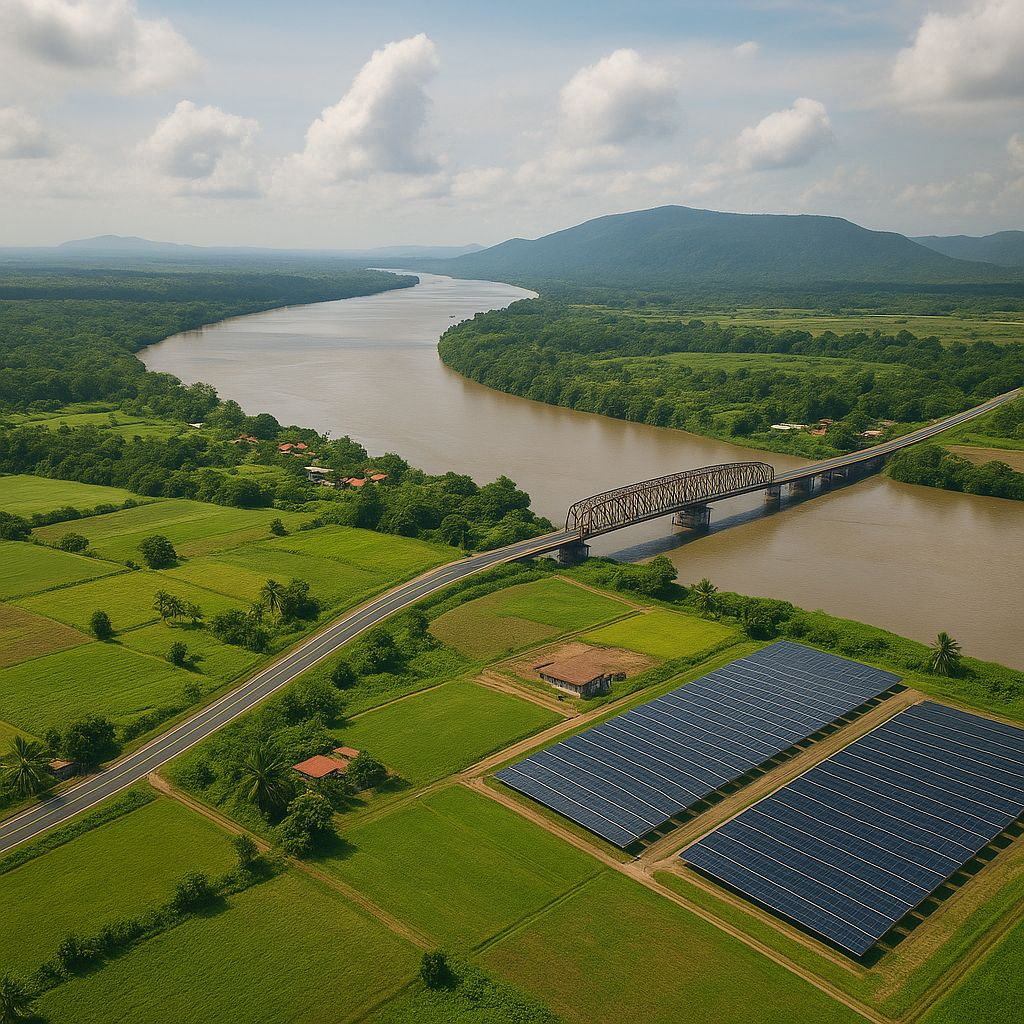
A Rising Power in the Blue & Green Economy
Guyana is rapidly emerging as one of the most strategically significant nations in the Western Hemisphere. With its exceptional natural assets, newly realised energy wealth, and a government committed to long-term sustainable development, the country is now positioned to become a global leader in both green and blue economy infrastructure.
While the surge in oil and gas production has captured international attention, Guyana’s real potential stretches far beyond hydrocarbons. Its forests, freshwater systems, coastline, biodiversity, and vast landmass place it at the centre of a rare opportunity: the ability to industrialise, modernise, and diversify while delivering low-carbon, climate-resilient growth.
1. Green Economy: Infrastructure for a Low-Carbon Future
Guyana is home to one of the world’s most intact and carbon-dense tropical forests. With its Low Carbon Development Strategy (LCDS 2030), the country is redefining how developing nations can grow sustainably.
Key areas where green infrastructure is accelerating:
• Renewable Energy & Grid Modernisation
The government is investing heavily in hydropower, solar farms, and modernised transmission systems. Large-scale solar plant projects, hinterland mini-grids, and the revival of the Amaila Falls hydropower project all signal a decisive shift toward clean energy infrastructure.
• Sustainable Forestry & Carbon Credits
Guyana’s forest protection model, recognised globally, has unlocked significant value through carbon credits. Infrastructure supporting monitoring, conservation, and sustainable forestry management is now attracting international partners and investors.
• Climate-Resilient Cities & Housing
Urban centres like Georgetown are undergoing a transformation as the country invests in modern roads, sea defences, flood control systems, and large-scale resilient housing developments.
• Sustainable Agriculture & Agro-Innovation
The push to become a regional food security hub opens new infrastructure opportunities in agri-processing, irrigation, logistics, cold storage, and climate-smart farming.
2. Blue Economy: The Power of Guyana’s Coast & Waterways
With over 450 km of coastline, rich marine biodiversity, and a vast river network, Guyana’s blue economy holds enormous untapped potential.
Strategic opportunities include:
• Port & Logistics Expansion
Guyana is quickly becoming a logistical gateway between South America, the Caribbean, and North America. New deep-water port developments, upgraded wharves, and modern river transport corridors are central to this vision.
• Sustainable Fisheries & Aquaculture
There is growing demand for sustainable seafood production supported by modern processing facilities, cold-chain infrastructure, and environmental monitoring.
• Coastal Protection & Nature-Based Solutions
The coastline—much of it below sea level—requires continuous investment in mangrove restoration, sea defences, and adaptive engineering systems. This is a major priority for both climate resilience and economic security.
• Eco-Tourism & Marine Conservation
Guyana’s pristine marine and freshwater ecosystems create opportunities for world-class eco-tourism supported by conservation-focused infrastructure.
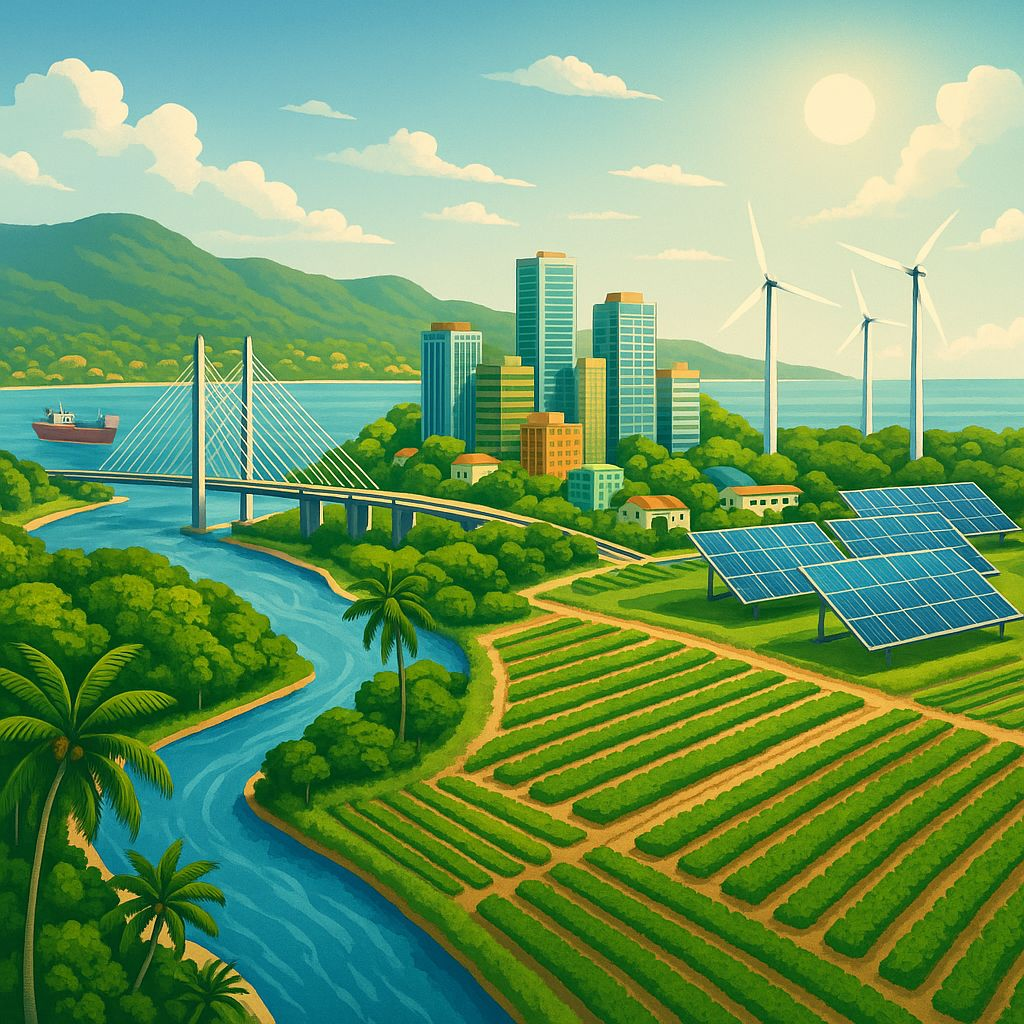
3. Enabling Infrastructure: Roads, Bridges & Regional Integration
The government is aggressively pursuing major infrastructure links, including:
• The new Demerara River Bridge
• The Linden–Lethem Highway, which will open a trade route to Brazil
• Modernised airports and expanded air connectivity
• Digital infrastructure upgrades to support an emerging tech ecosystem
These projects will strengthen the country’s position as a regional logistics and investment hub.
4. A Rare Window: Aligning Investment With Sustainable Growt
Few countries have the combination that Guyana has today:
• Major new revenue streams
• A supportive business environment
• Strong government planning
• Vast green and blue economy resources
• International geopolitical interest
• A young, growing population
The timing is critical. Infrastructure investments today will shape Guyana’s economic, social, and environmental future for generations.
What makes Guyana’s case exceptional is not only the scale of opportunity—but its commitment to ensure that development is low carbon, resilient, and inclusive.
5. The Opportunity for Global Partners
Guyana needs trusted, credible partners capable of delivering:
• Sustainable energy solutions
• Coastal & climate-resilient engineering
• Smart ports and logistics systems
• AI-enabled infrastructure planning
• Housing and urban development
• Water and waste management
• Green and blue economy innovation
Investors who understand environmental stewardship and international ESG standards will find a government eager to collaborate.
Conclusion: A Blueprint for the Future
Guyana is no longer a frontier market—it is an emerging global case study in how a country can harness natural assets responsibly while accelerating modernisation. Its green and blue economy potential, combined with strong leadership and rising global relevance, make it one of the most exciting infrastructure destinations of the decade.
The world is watching. And many are already positioning themselves to be part of Guyana’s transformation story.
We have close relations with stakeholders in Guyana. Contact: richard@octaviusgb.com